A brown ring on the ceiling, a drip during a heavy storm, or a damp patch that shows up every spring — skylight leaks are one of the most common calls we get from New York City homeowners and property managers. The good news is that most leaks can be traced and corrected. The bad news is that they rarely fix themselves, and winter in NYC makes them worse. If you are searching for skylight leak repair in NYC, this guide explains where leaks actually start, how to tell a true leak from condensation, and why fall is the best time to get it done.
Why Fall Is the Right Time for Skylight Leak Repair in NYC
New York winters put skylights through a cycle that few other building components face. Water gets into a small gap, freezes overnight, expands, and opens that gap a little wider. Snow sits on flat roofs for days around skylight curbs. Heavy rain followed by a hard freeze can push water past seals that held up fine all summer.
Most roofing and glazing work also depends on dry, mild weather. Sealants, membranes and flashing materials need reasonable temperatures to cure and bond properly. Scheduling a skylight inspection in October or early November gives you the best chance to finish corrective work before the first freeze — and before a small stain becomes damaged drywall, wet insulation or mold.
Where Skylight Leaks Actually Start
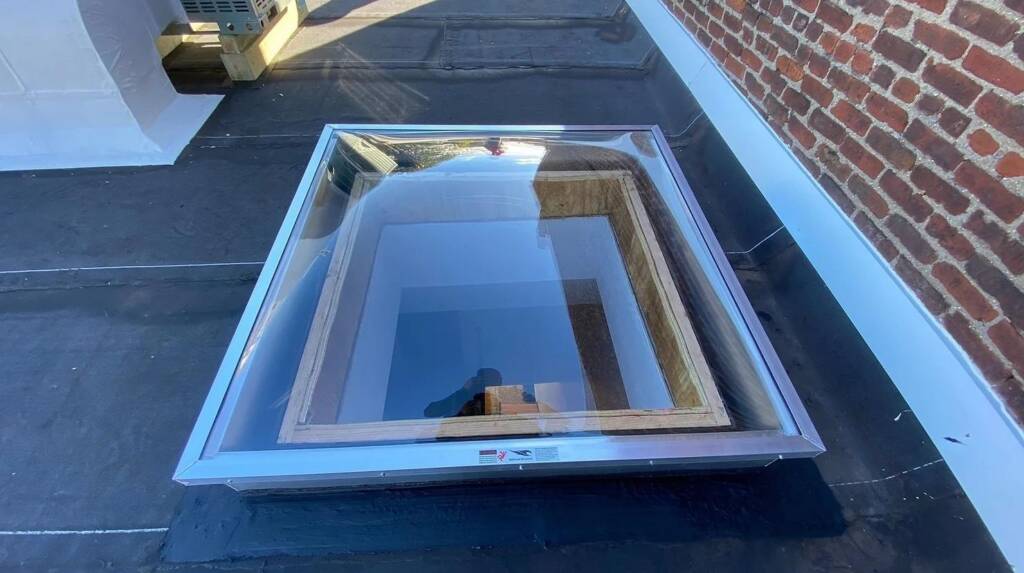
A ceiling stain shows where water became visible, not necessarily where it entered. Water can travel along framing, curbs, roof membranes and insulation before it appears inside. That is why repeatedly caulking the spot you can see often fails. The most common sources we find on NYC skylights are:
- Failed perimeter seals — sealant between the glass and frame dries out, cracks or pulls away after years of sun and temperature swings.
- Curb and flashing problems — the transition between the skylight curb and the roof membrane is where many leaks begin, especially after roof work by other trades.
- Drainage and weep issues — blocked weep holes or poor drainage let water collect inside the frame instead of shedding off it.
- Damaged or broken glass — a cracked pane or a failed insulated glass unit lets water and moisture in.
- Fasteners and frame joints — loose or corroded fasteners and open frame joints create small paths that grow over time.
Our skylight waterproofing and leak correction work starts by tracing the probable water path across the glass, frame, curb and roof interface — not by sealing the symptom.
Is It a Leak or Condensation?
Not every drip is a leak. In winter, warm, humid indoor air meets cold glass and turns into water — the same thing that happens on a cold drink. Condensation on a skylight usually appears on cold days with no rain, forms evenly across the inside of the glass or frame, and gets worse when the heat is running, someone showers or the kitchen is busy.
A true leak usually follows weather: it shows up during or after rain or melting snow, and it often appears at one corner or edge. If your skylight drips mostly on dry, cold days, the solution may be better skylight insulation and thermal performance rather than waterproofing. Sometimes it is both, which is why a proper diagnosis matters before anyone starts applying sealant.
Repair or Replace? How to Decide
Many skylights can be repaired. Resealing, re-glazing a single pane, correcting the flashing or replacing a failed insulated glass unit can solve the problem at a fraction of the cost of a new unit. Replacement makes more sense when:
- The frame is corroded, warped or structurally compromised.
- Multiple glass units have failed, or the glass is fogged between panes.
- The skylight has leaked repeatedly despite past repairs.
- You want better energy performance, safer glass or a different design.
When a full replacement is the right call, our skylight repair and replacement team can match the existing opening or design a new unit through our custom skylight installation service.
Our Skylight Leak Repair Process
Every building is different, but our approach to skylight leak repair in NYC follows the same disciplined steps:
- Interior review — we document the stain pattern, timing and weather conditions when the leak appears.
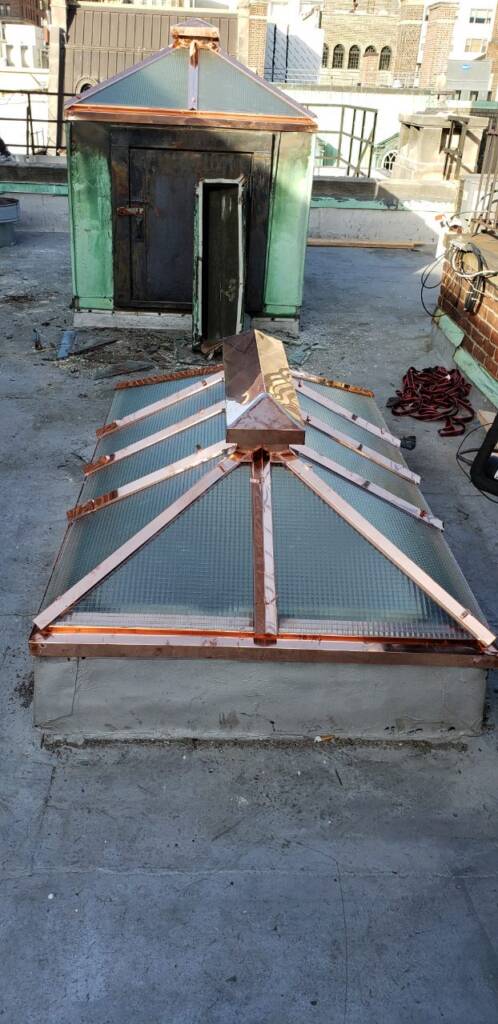
- Rooftop inspection — glass, seals, frame joints, fasteners, curb, flashing and drainage are inspected as one system.
- Leak-path diagnosis — we identify the most likely entry point and explain it in plain language.
- Corrective work — resealing, re-glazing, flashing correction or replacement, depending on what we find.
- Follow-up — we confirm the correction holds through the next weather event.
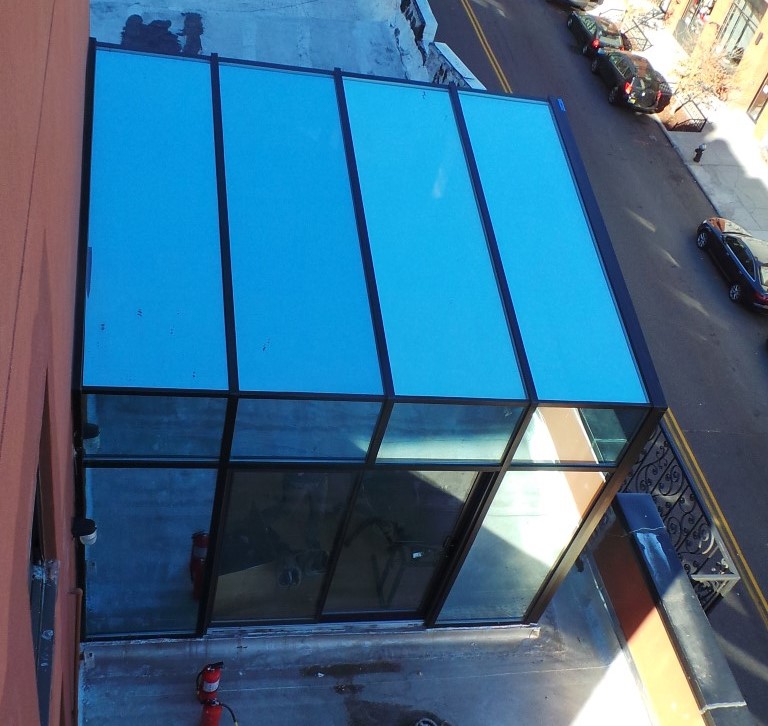
We have handled everything from small residential units to projects like the Hyatt Place custom skylight in SoHo and a custom residential glass roof in Forest Hills, Queens. You can see more in our skylights and glass roofs services.
A Quick Fall Skylight Checklist
- Look for new stains, peeling paint or bubbling around the skylight opening.
- Check whether the glass is fogged or has moisture between the panes.
- Clear leaves and debris from around the skylight and nearby roof drains.
- Note whether drips happen during rain or on cold, dry days.
- Ask whether any roof work has been done near the skylight recently.
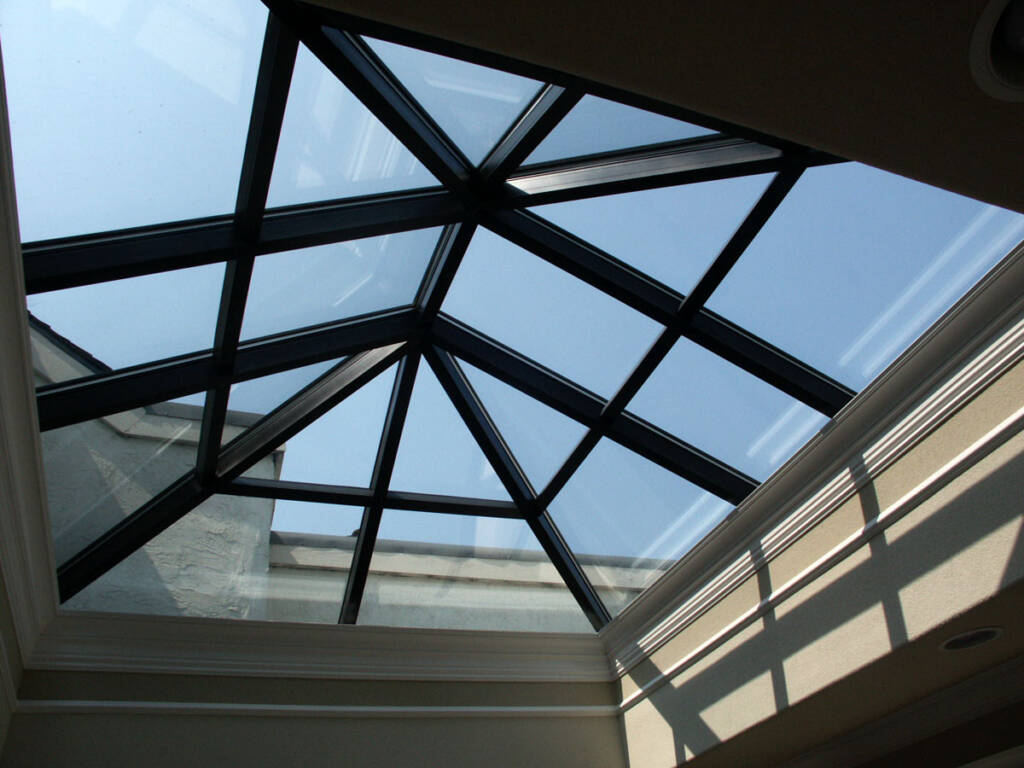
Skylight Repair Across All Five Boroughs
NYC All Glass provides skylight inspection, leak correction, insulation and replacement throughout Manhattan, Brooklyn, Queens, the Bronx and Staten Island — for brownstones, co-ops, condos, hotels, offices and commercial buildings.
Frequently Asked Questions
Can a leaking skylight be repaired in winter?
Emergency protection can be done in most conditions, but many sealants and flashing materials perform best in dry, moderate weather. That is why we recommend scheduling inspections and corrective work in the fall.
Why does my skylight only leak sometimes?
Intermittent leaks often depend on wind direction, heavy rain or melting snow. Water may only reach the weak point under certain conditions, which is why tracing the leak path matters more than sealing the visible stain.
Do I need to replace my whole skylight?
Not always. Many leaks are solved by resealing, flashing correction or replacing a single glass unit. Replacement is recommended when the frame is failing or the skylight keeps leaking after previous repairs.
Schedule a Skylight Leak Review
Don’t wait for the first snowstorm to find out where the water is coming in. Call NYC All Glass at 718-758-5515, email office@nycallglass.com or request a quote online to schedule a skylight leak review anywhere in New York City.